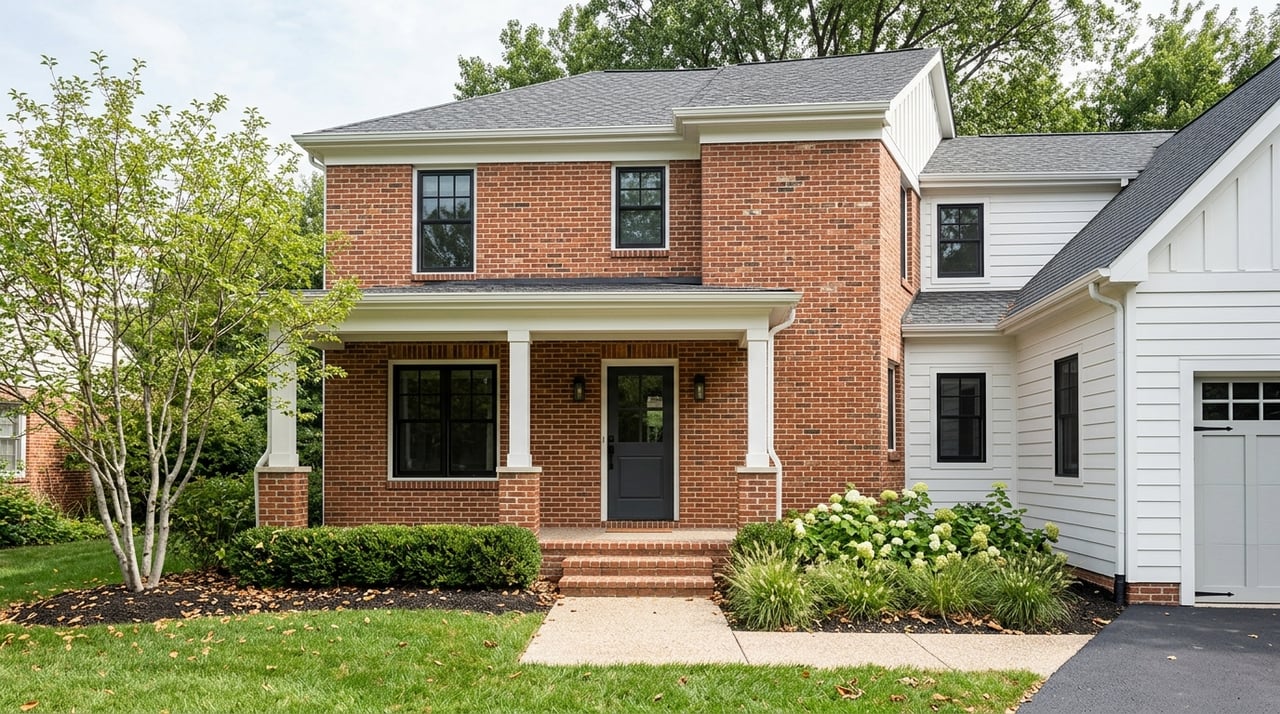
Wondering what kind of home you will actually find in Delaware, Ohio? In 43015, the answer is not just one style. You can move from historic streets near downtown to mid-century ranches in established subdivisions to brand-new homes on the edge of town, all within the same market. If you are trying to decide what fits your budget, lifestyle, and maintenance comfort level, this guide will help you compare the options and shop with more confidence. Let’s dive in.
Delaware Home Styles at a Glance
Delaware has a broad housing mix, which is one reason so many buyers find it appealing. Detached single-family homes make up 61.6% of the city’s housing stock, with another 7.8% in 1-unit attached homes. The age range is wide too, from homes built in 1939 or earlier to subdivisions from the 2000s and newer construction built in 2014 or later.
That variety shows up in the floor plans you will see most often. About 39.1% of homes have 3 bedrooms, and 21.9% have 4 bedrooms, so family-sized layouts are common across several home styles. In practical terms, most buyers in Delaware are choosing among three broad categories: historic homes near downtown, older suburban homes in established neighborhoods, and newer open-concept builds around the outer edges of town.
Historic Homes Near Downtown
If you love charm, detail, and a sense of place, Delaware’s historic core is where you will likely start looking. The city’s Traditional Residential areas are described as walkable, pre-automobile neighborhoods with grid streets, wide sidewalks, tree lawns, porches, stoops, balconies, and one- to three-story homes. These areas tend to feel different from newer neighborhoods because the lots, setbacks, and street patterns were shaped long before modern subdivision design.
Near downtown, you may find homes with brick exteriors, tall ceilings, hardwood floors, original woodwork, fireplaces, screened porches, and formal rooms that are less common in newer builds. Current local examples include an 1876 Italianate on West Winter Street and a 1901 home on North Liberty Street. Those examples show how historic homes in Delaware can range from modestly sized residences to much larger restored properties.
What to Expect From Historic Layouts
Historic homes often offer character that is hard to replicate in new construction. You may see parlors, separate dining rooms, dens, decorative fireplaces, and detailed trim work. For buyers who enjoy architecture and older craftsmanship, those features can be a major draw.
At the same time, older homes do not always follow today’s open-concept expectations. Room flow may feel more divided, closets may be smaller, and bathrooms may be fewer than in newer houses. That does not make them better or worse, just different, and it is important to know which style fits how you want to live.
Historic District Rules Matter
If a home is located within Delaware’s Downtown Historic District, exterior changes come with an extra layer of planning. Exterior alterations require a Certificate of Appropriateness, and the city’s Architectural Standards cover items like paint colors, fixtures, signs, roofs, and façade work. For buyers, that means your renovation timeline and design choices may need approval before work begins.
This is not necessarily a downside, but it is something to understand early. If you love preserving historic details, these standards may help protect the character that drew you in. If you want to make fast or major exterior changes, you will want to ask careful questions before you buy.
Mid-Century and Established Suburban Homes
If you want a more familiar suburban layout without going all the way to new construction, established Delaware neighborhoods can offer a nice middle ground. The city describes Suburban Residential areas as post-1940s subdivisions with more uniform housing types and styles, attached garages, and one- to three-story homes. These neighborhoods are generally found toward the perimeter and along major corridors.
A good local example is a 1955 ranch on Crestview Drive with 3 bedrooms, 2 baths, hardwood floors, an open floor plan, a mudroom, and an oversized 2-car garage. That listing reflects what many buyers like about this category. You can often get practical layouts, garage space, and mature neighborhood settings without taking on the full unknowns of a much older home.
Why Ranches Stay Popular
Ranch homes remain popular because they can be simple to live in and easy to understand at first glance. Single-level living appeals to many buyers, and older ranches often sit on established lots with room to spread out. In some cases, they have already been updated with more open kitchens, newer mechanicals, or improved basement systems.
These homes may not have the ornate trim or architectural drama of a historic property, but they often hit a sweet spot for buyers who want function, comfort, and manageable upkeep. They can be especially appealing if you want an established neighborhood feel with less complexity than a downtown historic home.
New Builds on the Edge of Town
If move-in-ready convenience is at the top of your list, newer construction may be the best fit. In Delaware, newer neighborhoods on the edge of town tend to feature open-concept floor plans, attached garages, and HOA-managed amenities. The city’s planning guidance also expects newer neighborhoods to improve sidewalk and trail connections, preserve tree lawns, and align scale and setbacks with nearby homes.
Recent examples in communities like Park View show what many buyers can expect. One 2025-built home sold for $373,910 and offered 4 bedrooms, 2 baths, an open-concept layout, a 2-car garage, and monthly HOA dues of $85. Other nearby new-build offerings in that same community were marketed around $420,990 to $446,990 for roughly 2,346 to 2,904 square feet.
What New Construction Usually Includes
Newer homes often appeal to buyers who want predictable finishes and fewer immediate projects. Builder marketing in Delaware highlights features like energy-efficient systems, Smart Home technology, builder warranties, and low-maintenance living. Those details can make a big difference if you are relocating, buying your first home, or simply do not want to spend your first year handling repair surprises.
The tradeoff is that newer homes may offer less architectural individuality than older properties. Some buyers are happy to make that exchange for updated systems, attached garages, and modern layouts. Others want more lot maturity or one-of-a-kind design, which may lead them back toward older neighborhoods.
How Prices Compare by Style
One of the biggest questions buyers ask is how price changes by home style. In 43015, market trackers place the area broadly in the low-to-mid $400,000s on the asking-price side, with somewhat lower closed-sale figures. Zillow reports a typical home value of $408,683, a median sale price of $358,333, and a median list price of $454,067, while Realtor.com reports a median listing price of $461,950.
The key is to treat those numbers as a price band, not a single exact benchmark. Different sources measure different things, and style, age, size, lot, and updates all affect where a specific home lands. Zillow also reports homes going pending in around 15 days, which suggests active demand in the Delaware market.
Here is a simple local shorthand based on current examples:
- Historic core homes: often range from the low $300,000s for smaller or more modest historic homes to the high $600,000s for larger restored properties.
- Mid-century and older suburban ranches: often land in the high $300,000s to low $400,000s.
- New builds: commonly cluster from the high $300,000s into the mid $400,000s for about 1,500 to 2,900 square feet, with some larger or premium homes priced higher.
Why Age Alone Does Not Set Value
It is easy to assume older means cheaper or newer means more expensive, but that is not how Delaware works. A historic home can command a higher price if it has been well restored, offers more square footage, or sits in a more architecturally significant pocket. At the same time, a newer home may still be competitively priced if it is compact or located in a neighborhood with many similar models.
When you compare homes, look beyond the year built. Focus on the condition of major systems, the quality of updates, lot size, layout, and the type of upkeep each home style is likely to require over time. That is often where the real cost difference shows up.
Maintenance Differences to Know
Maintenance is one of the clearest dividing lines between Delaware home styles. Older homes may need more attention to insulation, windows, doors, and heating systems. Older furnace and boiler systems often run at much lower efficiency than modern systems, and older chimneys may need inspection or relining when equipment changes are made.
That does not mean every older home will be costly, but it does mean you should ask detailed questions and review inspections carefully. In the historic district, exterior improvements may also involve the city approval process, which can add time and planning to projects like roofing, painting, or façade work.
Newer homes, by contrast, often appeal to buyers because utility bills and maintenance needs may be lower in the early years. Efficient systems and newer materials can reduce near-term surprises. If your priority is simplicity, this can be a major advantage.
Which Delaware Style Fits You Best?
The right fit usually comes down to how you want to live, not just what looks best in photos. If you love character, walkable streets, porches, and period details, a historic home near downtown may feel like home. If you want practical layouts, attached garages, and an established neighborhood setting, an older suburban home may be the better match.
If you prefer open-concept living, modern systems, and fewer immediate projects, new construction may check more boxes. None of these choices is universally best. The goal is to match your budget, maintenance comfort, and day-to-day lifestyle with the style that supports them.
Buying in Delaware is easier when you understand what each part of the market really offers. Whether you are drawn to a historic street, a classic ranch, or a newer build with modern features, having local guidance can help you compare options clearly and move forward with confidence. If you are thinking about buying or selling in Delaware or anywhere around Central Ohio, I Care Home Group is here to help you make a smart, low-stress move.
FAQs
What home styles are most common in Delaware, Ohio?
- Delaware’s housing stock is led by detached single-family homes, and buyers commonly choose among historic homes near downtown, older suburban homes in established neighborhoods, and newer builds on the edge of town.
What should buyers know about Delaware historic homes?
- Historic homes near downtown often offer original woodwork, tall ceilings, porches, fireplaces, and formal rooms, but they may also come with different layouts, older systems, and added planning for exterior updates in the historic district.
What is the Downtown Historic District in Delaware, Ohio?
- The Downtown Historic District is a protected area where exterior alterations require a Certificate of Appropriateness, and city standards apply to items such as roofs, paint colors, fixtures, signs, and façade work.
What do suburban homes in Delaware, Ohio usually look like?
- Established suburban homes in Delaware are often found in post-1940s neighborhoods and commonly feature attached garages, one- to three-story layouts, and more uniform architectural styles than homes near downtown.
What can you expect from new construction in Delaware, Ohio?
- New construction in Delaware often includes open-concept floor plans, attached garages, energy-efficient systems, Smart Home features, and HOA-managed amenities in some communities.
How much do homes cost in 43015 Delaware, Ohio?
- Recent data and local examples suggest a broad range, with historic homes often starting in the low $300,000s, mid-century suburban homes often in the high $300,000s to low $400,000s, and many new builds in the high $300,000s through the mid $400,000s.
Are older homes in Delaware, Ohio always cheaper than new builds?
- No. In Delaware, value depends on size, condition, updates, lot, and location, so a restored historic home can cost more than a newer home, while a compact new build may be priced competitively.
